
I Attended a Quentin Tarantino Movie Screening in Fortnite

As the lobby loaded and the entrance to the movie theater rendered on my PC, I found myself surrounded by familiar faces: Bart Simpson (in a mech suit, for some reason), a Xenomorph from Alien, Naruto, Black Widow, John Wick, and a Stormtrooper. I was Mira from KPop Demon Hunters, of course.
Yeah, this is Fortnite.
But I wasn’t here for the 100-person battle royale mode. I was here to watch a movie. A Quentin Tarantino movie, actually.
With the launch of season one of Fortnite’s seventh chapter (translation in business terms: Q1 of the 7th fiscal year), the game added a pop culture icon: The Bride from the Kill Bill franchise. On a regular basis, Fortnite adds characters from films, TV, other games, and internet culture to the roster. However, this time was different.
The digital movie theater that I was attending was hosting a screening of The Lost Chapter: Yuki’s Revenge, a deleted sequence that was originally part of Kill Bill Vol. 2. It was never filmed… in real life, anyway. Through the partnership with Epic Games, Tarantino directed this scrapped segment in Fortnite’s engine using in-game assets.
Back in the lobby, I hung out with these strangers, all donning our pop culture masks. We played a minigame where we made popcorn, collected stars for XP, and danced in front of props from The Lost Chapter. It… doesn’t sound like much on paper (it actually sounds really dumb as I write this), but it’s the type of shared experience that Fortnite does best.
I’m a proponent of creating content where people consume it, and for 1.3 million daily average users, that place is Fortnite. The platform (I’ll call it a platform) has transcended gaming and become a place where people gather. I’ve even attended two concerts in Fortnite: The Kid Laroi and Sabrina Carpenter.
But it wasn’t always like this. Fortnite was announced and launched as a co-op experience where players built literal forts to survive waves of monsters at night. It wasn’t until the success of another battle royale, PUBG, that Fortnite added, and essentially copied, the mode. Fortnite has always been about adapting, whether that’s making changes to bring in players or offering them something they simply cannot get anywhere else.
OK, it’s just about showtime. We gathered in the virtual auditorium, the curtains drew, and the lights dimmed. A playful intro started the presentation, reminding us to get snacks. And now, 20 years after the release of the film it was supposed to be a part of, we were watching The Lost Chapter.
The 10-minute short film doesn’t feel like it was made in a video game. It feels more like Spider-Man: Into the Spider-Verse or the aforementioned KPop Demon Hunter. It has the choreography, editing, and performances (Uma Thurman voices The Bride) of a Tarantino movie. At the end of the day, it’s not much: a brief setup, cool action sequence, and then it’s done. You’re booted back to the lobby. But it represents yet another proof point of Fortnite’s stickiness, cultural impact, and strong community.
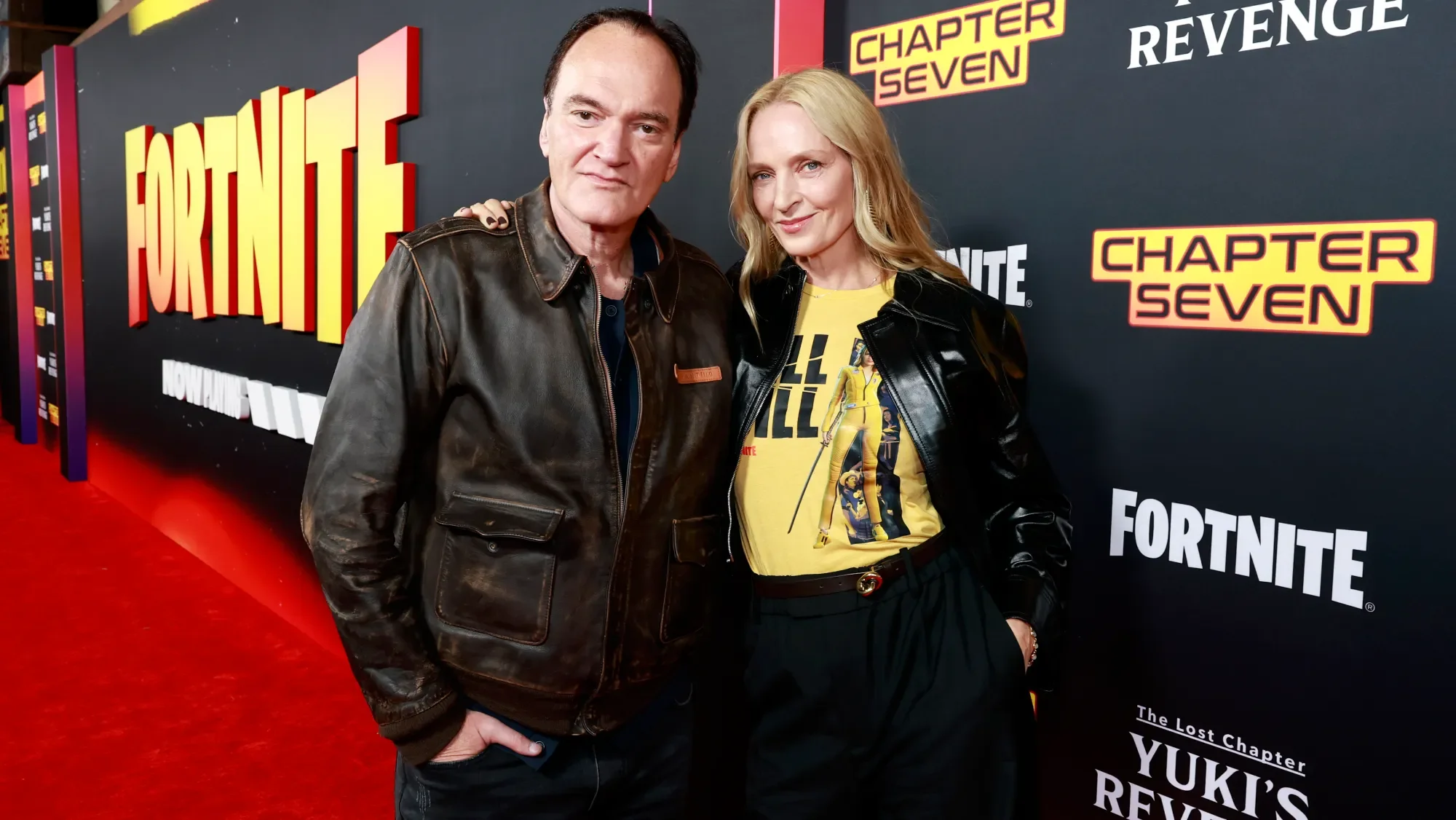
Quentin Tarantino and Uma Thurman pose together at the real-world red carpet for The Lost Chapter.
For a brief while, tech companies were obsessed with the idea of the metaverse: A 3D virtual world where we live out our second life. Famously, Meta dumped $45 billion into the concept to no avail. Meta’s ideal Metaverse is another place where we consume content, just as we do on our phones, streaming services, and in physical spaces. But alas, a video game where I battle Optimus Prime, Ariana Grande, and Giannis Antetokounmpo made calculated moves, brokered historic partnerships, and, ultimately, pulled the victory royale.
And if Quentin Tarantino is willing to premiere a film there, the rest of us should probably pay attention.
At Say More, we take a similar approach to content: meeting people exactly where they already are, not where some say they should be. We build for the real world, creating content that feels native to how audiences scroll, watch, listen, and interact. Plus, we adapt fast. Conditions change, platforms evolve, attention shifts, but the mission stays the same: make content people actually want to spend time with, wherever they happen to be.

Want to talk about content?
Contact us to start the conversation.